
Nepal’s September 2025 Unrest and What It Means for Fair Trade Manufacturing in Nepal

In September 2025, nationwide unrest erupted, disrupting daily life, business operations, and supply chains across the country. In this article, we share a summary of what happened and how the protests in Nepal affected work at Purnaa.
Security forces responded with tear gas, water cannons, rubber bullets, and later live ammunition. At least 76 people were killed, with many others injured. Several government buildings, including the parliament complex and official residences, were damaged or set on fire. Shortly after, the Prime Minister resigned, and an interim government was appointed.

Impact on Daily Operations at Purnaa
Initially, the scheduled protest was peaceful, however, over the course of the day and subsequent days, the situation escalated. The unrest led to curfews, transport disruptions, and temporary closures across Kathmandu. Like many local businesses, Purnaa adapted its operations in response, administration staff worked from home for nearly a week, while production staff were unable to work. Team members reported rioting and smoke in their neighbourhoods from fires set during the unrest. Team leaders would check in on staff safety and needs daily. Once authorities signalled improved security, the factory reopened with adjusted schedules and safety checks. Many customers contacted us to check on staff safety and offer support.
The manufacturing sector faced varied impacts depending on location, supply chain structure, and access to transport. The impacts lasted for about 5 days total.
Airport closures halted international cargo for two days, delaying exports.
Movement restrictions limited workers’ ability to reach factories.
Safety concerns led many companies to pause operations temporarily.
Logistics and domestic transport were slower due to road checkpoints and curfews.
Because the airport reopened quickly, long-term export delays were minimal.
The role of Fair Trade businesses during a crisis
This time was filled with uncertainty for the whole team. Periods of political instability highlight the importance of stable and supportive workplaces, especially in contexts where public welfare systems are limited and political trust is weak. During the protests, our employees required support for stability, communication, information and reassurance.
At Purnaa, we focused on:
Prioritising staff safety by shifting to remote work and monitoring local conditions.
Providing clear and consistent communication so team members knew what to expect.
Offering emotional and practical support, recognising that many families were directly affected.
Maintaining stability in employment, wages, and schedules as soon as it was safe to do so.
Fair Trade principles emphasise security, dignity, and long-term development. In moments of national crisis, these commitments become even more important. While we cannot control external events, we can aim to provide a workplace where people feel supported, valued, and able to plan for their future, even during uncertainty.
By working with Fair Trade manufacturers and businesses, brands can help strengthen local communities through stable, long-term orders and reliable employment.
The situation reinforced why Purnaa and our values are important to our team during crises. Our purpose is to provide stable, dignified employment in Nepal, particularly during periods of economic or social uncertainty. By offering a reliable working environment with fair wages, skills development, and clear pathways for progression, we can help to provide financial stability for individuals and their families.
Staying True to Our Mission
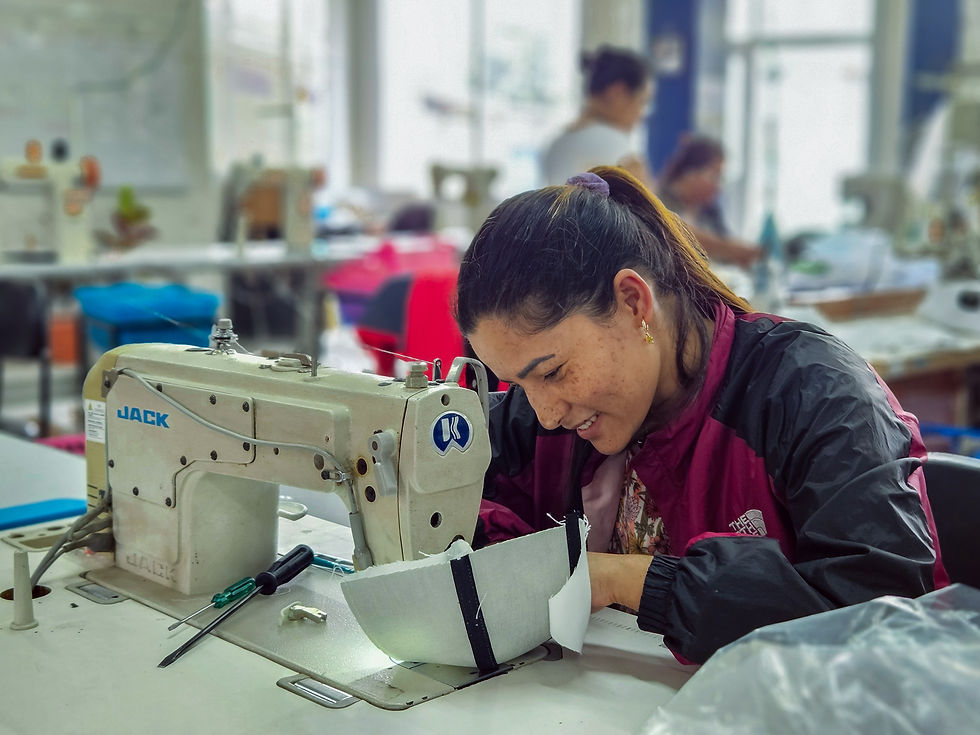
Despite the uncertainty, our commitment to creating responsible livelihoods has not wavered; we remain focused on:
Prioritising our people: ensuring every team member feels safe, seen, and supported.
Empowering marginalised groups: especially those who have faced exploitation, abuse, discrimination or lack of opportunity.
Transforming lives: by offering not just jobs, but training, community, and a path toward independence and dignity.
Fair Work Globally
Nepal’s recent unrest mirrors challenges faced across many global supply chains. Political instability, climate-related disruptions such as landslides affecting transport routes, and widening inequality all have direct impacts on manufacturers, workers, and local economies. These conditions contribute to ongoing discussions about what fair work involves in practice. Beyond wages, fair work includes safety, stability, and long-term employment opportunities, particularly when external conditions are unpredictable.
Heading into 2026, Purnaa will continue to focus on supporting our workforce, strengthening local production systems, and maintaining transparent and ethical manufacturing practices, through periods of peace and uncertainty.


