
Ultimate Production Cost Calculator: Your guide to manufacturing costs, hidden fees and production planning

Understanding the true cost of creating products with a manufacturer can be a challenge. Lots of companies focus on the unit cost and overlook additional costs that impact overall budgets and profit margins. These expenses quickly add up if they are not considered early on.
To help brands plan ahead and budget, we created this Production Cost Calculator. Drawing on decades of manufacturing experie
nce and the shipment of nearly one million products worldwide, this guide highlights the often overlooked costs to bring a product to market. We share practical insights to help you avoid common budgeting pitfalls, and provide a clear framework for estimating the true cost of your production project with confidence.
Looking to start a production project?
Who is the production cost calculator for?
This guide is useful for:
Brand founders and business owners
Product development teams
Production managers
Finance and operations teams
Start-ups preparing their first production run
The calculator can also be used as a practical production checklist, identifying costs that are overlooked during budgeting.
Ready to estimate start budgeting? Try the calculator below!
What is Cut and Sew Manufacturing?
Cut and sew manufacturing involves cutting fabric or other materials according to a pattern, then sewing the individual components together to create the finished product.
Cut-and-sew manufacturing costs can vary depending on the complexity of the product, number of pattern pieces, materials, labor requirements and production volume.
How to calculate manufacturing costs
Most manufacturing projects can be divided into three stages:
Sampling and development
Bulk production
Delivery
Each stage involves different costs, and all can have hidden fees that are easy to overlook.
Sampling & Development: Fee Considerations
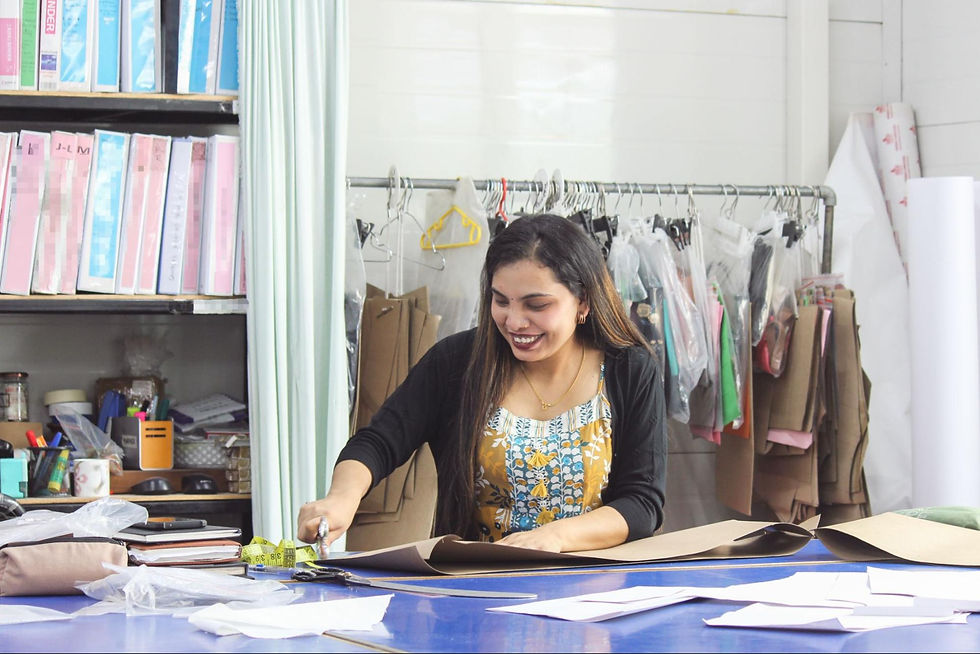
Sampling is a critical part of the product development process to test design, fit, functionality and quality before committing to production. Every manufacturer approaches sample fees differently. Some factories charge full sample costs, while others may reduce or credit sample fees once bulk production is confirmed.
For manufacturers, sampling is often labor-intensive and requires skilled staff, pattern development, sourcing and production time. While sample charges help cover some of these costs, they rarely cover the full amount invested by the factory.
Because of this, sample fees can vary significantly between suppliers. Some manufacturers, like Purnaa, offer sampling packages rather than charging for each individual sample.
Common Types of Samples
Sample Type | Other Common Names | Description | Typical Fee |
Development Sample | First Sample, Prototype Sample, Initial Sample | The first version produced from a tech pack, sketch or specification. Used to assess construction, materials, workmanship and overall design. | Often free for established customers, or 1x-4x unit cost |
Second Sample | Counter Sample, Revised Sample, | Produced after feedback on a previous sample to address fit, construction or design changes. Multiple rounds may be required. | Usually charged at 1x-3x unit cost |
Fit Sample | Size Sample, Fitting Sample | Specifically produced to assess fit, sizing and measurements before final approval. Brands may also request a full range of sizes produced to confirm grading and fit consistency across the size range. | Often 1x-3x unit cost |
Pre-Production Sample (PP Sample) | Production Trial Sample, Final Sample | Made using production-ready materials, trims and processes before bulk production begins. Used to verify readiness for manufacture. | 1x-3x unit cost |
Salesman Sample (SMS) | Sales Sample, Marketing Sample, Photo Sample | Produced for retailer presentations, trade shows, photography, marketing campaigns and order-taking. Often made before production quantities are confirmed. | Typically 3x-5x unit cost |
Photo Sample | Marketing Sample, Ecommerce Sample | Produced specifically for content creation, catalogues, websites and advertising materials. | Usually 2x-5x unit cost |
Gold Sample | Sealed Sample, Approved Sample, Master Sample | The final approved sample used as the reference standard during production and quality inspections. | Typically 1x-3x unit cost, though some factories provide it for free after approval |
Shipment Sample | Retention Sample Production Sample | Selected from production and retained as a quality reference. It includes all packaging and trims | Often included in production cost, but sometimes charged separately |
Want to find more about sample fees ? We wrote a comprehensive blog on how much you should pay for your samples here.
Other Pre-Production costs to consider
Fashion design / graphic design costs
If you do not have in-house design capabilities, you may need to budget for external fashion designers, graphic designers or product designers to develop concepts, create artwork, prepare tech packs and finalise product specifications. These costs can range from a one-off freelance fee to ongoing design support.
Pattern development
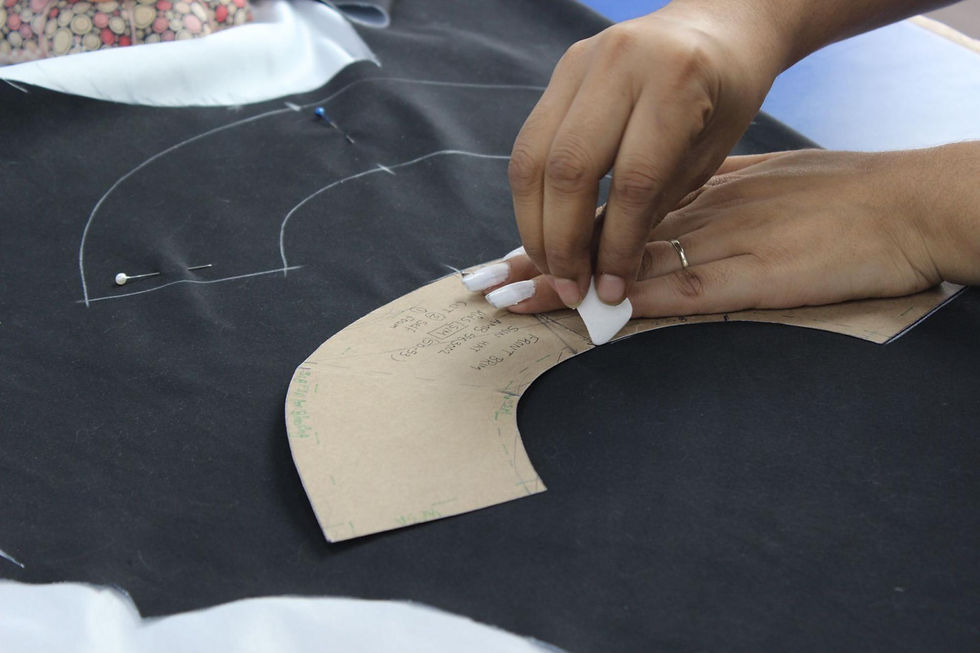
Pattern costs are sometimes included within sample fees, but not always. Separate pattern-making charges may apply based on the number of pattern pieces, style variations, and sizes developed.
Tolerance requirements specified for the product can also add costs.
Tolerances are the acceptable level of variation in product measurements during production. Standard industry tolerances allow for minor differences between the approved specification and the finished product.
Where very tight tolerances are required, additional time and resources may be needed during pattern development, sample revisions, fitting, quality control, and production to ensure greater consistency and accuracy. As a result, tighter tolerances can increase both sampling and production costs, particularly for complex styles or garments with detailed fit requirements.
Custom colours & materials
Custom colours can require minimum order quantities (MOQs) and may incur additional colour-matching, lab dip or dyeing charges before production can begin. Similarly, custom fabric compositions or material blends can be more expensive to source, particularly during the sampling stage, as mills may need to produce small development runs. Where possible, using stock fabrics or materials that are already regularly sourced by the factory can help reduce costs and lead times.
Custom vs stock trims
Custom trims such as branded labels, buttons, zips, packaging or hardware often require development fees, tool/mould costs and higher minimum order quantities. Using stock trims that are already sourced and regularly used by the factory can reduce costs and lead times.
Courier Costs
Samples need to be shipped for review and approval. International courier charges can quickly add up, particularly when multiple revisions are required.
💡 A good approach is to track average courier costs across projects so you can estimate future expenses more accurately.

Taxes and Duties
In many cases, samples can be imported without duties, depending on local regulations and how they are declared.
To help avoid unnecessary charges, packages should clearly state that the contents are non-commercial samples. Always check local import requirements before shipping.
Sample Revisions
A cost often overlooked is the number of sample revisions requested. Multiple rounds of revisions can increase development costs and extend timelines, especially for changes that affect all areas of a product. Material changes can affect the entire design due to changes in stretch, fit and sizing.
Tip: The more complete your tech pack and specifications are from the start, the fewer revisions are typically needed.
Testing & Inspections
Depending on the product category, destination market and applicable regulations, products may need to undergo testing and/or inspection before shipment. Testing/inspections can require additional samples and materials to be produced and sent to certified third-party testing labs for assessments such as colour fastness, flammability, chemical content, durability, tensile strength or product safety.
Third-party testing costs typically range from $50-$300 per test/inspection depending on requirements and number of variations being assessed, courier charges also apply.
See our recent blog on Stuffed Toy & Doll Safety Testing Requirements, for more information on testing requirements and considerations.
Planning a Production Project? If you're preparing for a new product launch and would like guidance our team can help you!
Production Fees
Once samples have been approved, the project moves into bulk production.
At this stage, some costs can extend beyond the quoted unit price. Understanding every component of production cost is essential for protecting your profit margins and forecasting accurately.
Key Production Costs to Consider
Custom dyeing charges
Material MOQs
Custom dies and tooling
Unit price
Labels and trims
Packaging
Shipping costs
VAT and import duties
Customs clearance fees
Freight management fees
Warehousing and storage
Let's break these down in more detail.
Unit Price
The unit price is the cost quoted by your manufacturer for each item produced.
While this is usually the largest production expense, it is rarely the only cost involved. A low unit price can sometimes mask additional charges elsewhere in the process.
Labels and Trims
Basic labels and trims are often included within the quoted unit cost. However, custom-branded labels, woven tags, zips, buttons, packaging components or trims supplied by nominated vendors may attract additional charges.
These costs should always be confirmed before bulk production begins.
Packaging Costs
Examples of packaging costs that should be considered include
Labels
Polybags
Swing tags
Any custom packaging sizes
Printed boxes
Stickers and barcodes
Retail-ready packaging
Protective transit packaging
Specific palleting requirements
When calculating the full cost of production, packaging should always be factored into your budget.
VAT, Duties and Tariffs
Import taxes and duties vary depending on:
Country of manufacture
Destination country
Product category
Commodity or HS codes
Some countries have trade agreements that can reduce import duties, making sourcing decisions more cost-effective. Ensuring products are classified correctly is important, as incorrect codes can result in delays or additional charges.
It is also important to note that tariff rates can change in response to government trade policies or international trade agreements. These changes can affect the total landed cost of goods, so businesses should regularly review applicable tariffs when planning production, pricing, and sourcing strategies.
Shipping Costs
Shipping costs are influenced by several factors, including:
Air freight versus sea freight
Shipment volume
Shipment weight
Delivery destination
Fuel surcharges
Freight providers often calculate charges using volumetric weight, meaning the amount of space your goods occupy can affect costs just as much as physical weight. Efficient packaging design can help reduce shipping expenses.
Customs Clearance and Freight Management
Many businesses use freight forwarders or customs brokers to manage international shipments.
While these services simplify the process, there are usually fees for:
Customs documentation
Import clearance
Duty management
Freight coordination
Port handling
These costs should be included in any realistic manufacturing cost calculation.
Warehousing and Storage
Warehousing is often forgotten when calculating production costs.
Consider:
Storage fees
Inventory management
Pick and pack services
Fulfilment costs
Stock transfers
Even after production is complete, these operational costs continue to impact your overall product profitability.
Bank Charges & Currency Fluctuations
A final cost to factor into your budget is bank fees and currency fluctuations. When making payments to overseas manufacturers, banks may charge international transfer fees, intermediary bank fees or foreign exchange fees.
Currency movements can also affect your final production cost. If your supplier quotes in a foreign currency, changes in exchange rates between placing your order and making payment can increase or reduce the amount you pay. For larger orders, even a small shift in exchange rates can have a noticeable impact on your overall costs.
Where possible, build a contingency into your budget and monitor exchange rates throughout the production process. This can help avoid unexpected costs and provide a more accurate picture of your total manufacturing spend.
Hidden Manufacturing Costs to Watch Out For
When creating a manufacturing budget, some of the most commonly missed costs include:
Sample revisions
Pattern development fees
Courier expenses
Custom trims and packaging
Import duties
Customs brokerage fees
Quality control inspections
Product testing and certification
Currency exchange fluctuations
Identifying these costs early can help prevent budget overruns and improve margin planning.
Choosing an Ethical Manufacturing Partner
Sustainable and Fair Trade manufacturing can appear more expensive at first because of certified materials, responsible sourcing, ethical labor practices, fair wages and compliance requirements. Over time, however, waste reduction, efficient processes and better resource management can help brands control costs and appeal to customers who care about ethical production.
Use Our Production Cost Calculator
Our Production Cost Calculator helps brands understand the full cost of manufacturing in advance. By accounting for all expenses, brands can build more accurate budgets, plan with confidence and avoid costly surprises later in the process.
Looking for more guidance?
Explore our Manufacturing Guides → for practical advice on customisation, materials, production and more.
About Purnaa
Purnaa is a social enterprise based in Nepal, producing garments and accessories through ethical manufacturing practices. The organisation focuses on creating fair employment, supporting workers, and building long-term partnerships with brands.


